THE DESIGNER
PROFESSIONAL IDENTITY
I aspire to become a design professional specializing in tangible interactive products and experiences that support users in exploring and understanding themselves from new perspectives. My design practice focuses on creating interactive systems that foster emotional awareness, self-acceptance, and reflection through embodied and tangible interaction.
This identity guides me in selecting projects that allow for embodied interaction and personal reflection, adapting a user-centered, iterative design process, and shaping my envisioned design future.
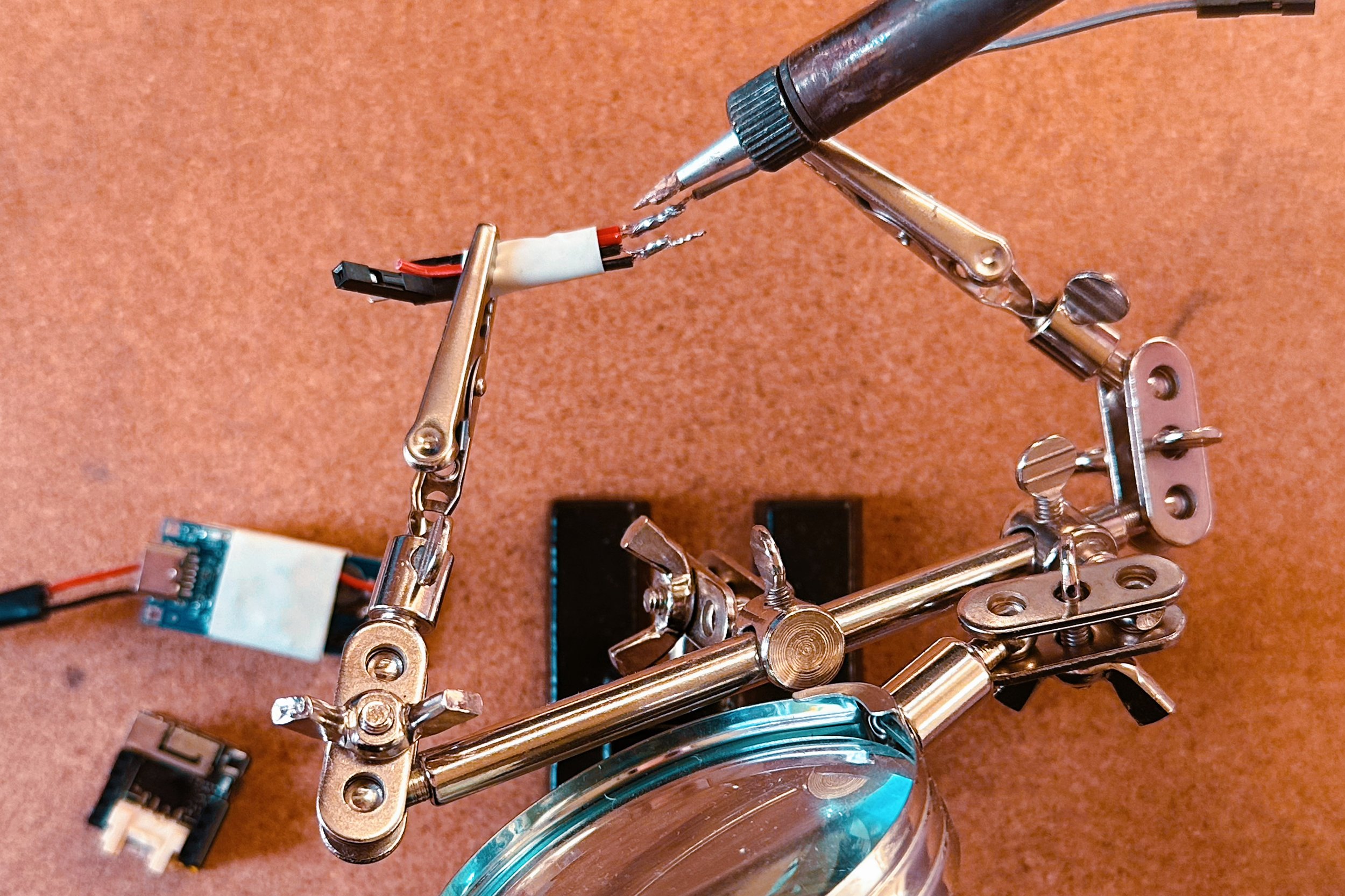
My strength lies in prototyping interactive systems that combine physical form, sensors, and feedback. These prototypes are used as active tools within a user-centered, iterative design process, allowing me to continuously refine concepts based on user interaction and feedback.
In team settings, I often take the role of rapid brainstorming and early-stage concept development. At the same time, I am learning to communicate my abstract design thinking more clearly.
A key challenge for me is collecting user data in more unsupervised ways with limited design scales and technology, particularly when aiming to explore design possibilities and generate insights from real-world contexts. Additionally, while my designerly practice is well supported by business and entrepreneurship analysis models, I recognize the need to further develop my knowledge of business planning and product production to design practically.
My design drive has consistently been centered on using technology to support self-realization, including self-awareness, self-regulation, and self-care. This drive has shaped the evolution of my professional identity, shifting it from a focus on problem-solving alone toward an approach that also emphasizes building awareness through interaction.
Guided by this identity, I aim to work in the future as a designer focusing on tangible and interactive systems within contexts such as wellbeing, education, or experimental interaction design. These fields allow me to further explore how embodied and interactive experiences can support reflection, learning, and personal development.

VISION
I envision a future in which, after technology has largely liberated productivity, its humanistic dimension becomes central. Rather than requiring people to adapt to technological systems, mature technologies will increasingly adapt to human bodies, emotions, and lived experiences. In this context, humanistic needs will drive a growing pursuit of personal self-realization, which will be supported by technologies that help people become more aware of, understand, and care for their own embodied experiences.
Initially, my vision was oriented toward direct technological intervention in mental well-being and supporting self-realization. However, this perspective was gradually challenged and reshaped through my learning process in design, as well as my own experience as a fidgeting toy user. My design attitude has shifted toward a more humble positioning of technology. I now prioritize understanding over adaptation, awareness over intervention, and reflection over correction. The vision values design that fosters inner exploration and ongoing self-dialogue through embodied interaction, instead of sensory stimulation or immediate gratification solely.
This vision situates my design practice at the intersection of technology, design, and psychology. Concepts such as the affective loop and somaesthetic design by Kristina Höök, clearly demonstrate how designers can use technology to support reflective engagement and gradual behavioral change, applying subtle, non-intrusive, and gentle interaction systems. Rather than offering prescriptive design rules or certain solutions, this vision functions as a reflective design attitude. In my own design process, the vision serves as a lens through which I evaluate, refine, and make my design decisions.
To bring this vision into practice, I focus on designing tangible and embodied interactive systems that encourage reflective engagement. On a broader level, this approach seeks to contribute design knowledge that values awareness and reflection over optimization and control in the context of self-realization-supporting design.