Design Entrepreneurship
AN EDUCATIONAL NUTRITION APP
DEVELOPMENT
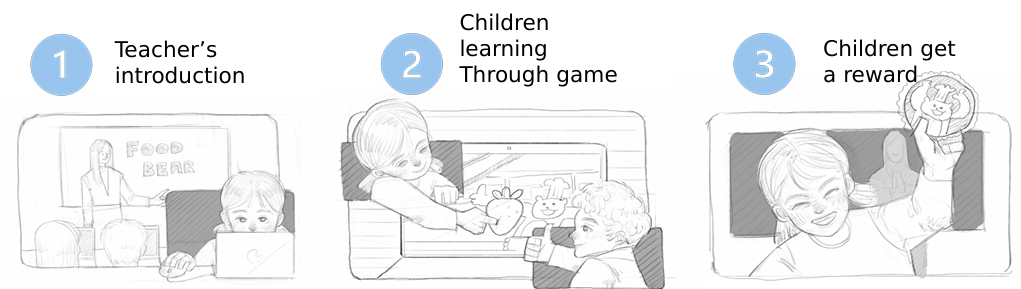
Designing a healthy nutrition education product with the municipality as the client and children as the users made me aware that, in addition to addressing societal challenges, design must clearly consider how a product can be implemented, funded, and sustained. This project expanded my understanding of the designer’s role beyond concept creation toward engaging with real-world constraints and responsibilities.
I systematically practiced an entrepreneurial design research process, from problem definition, stakeholder mapping, to concept validation and business feasibility assessment. I realized that design is not only a tool for exploring possibilities, but also to reduce uncertainty and making actionable, realistic plans. This project develops my professional identity, which reflects on design through business and implementation perspectives.
EAs
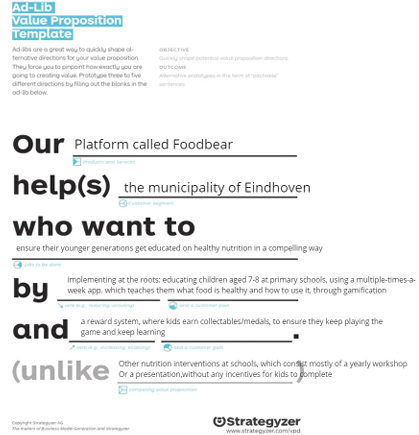
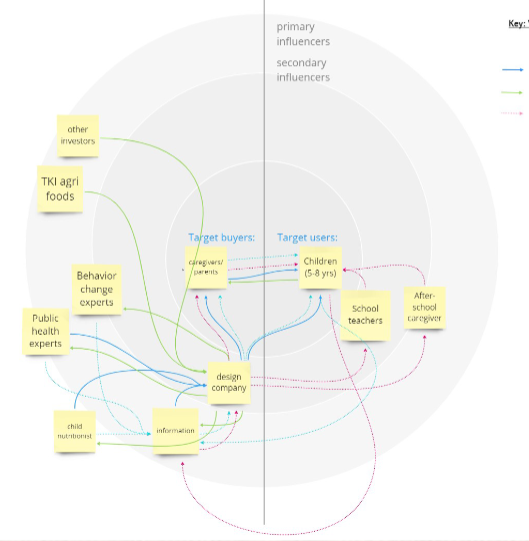
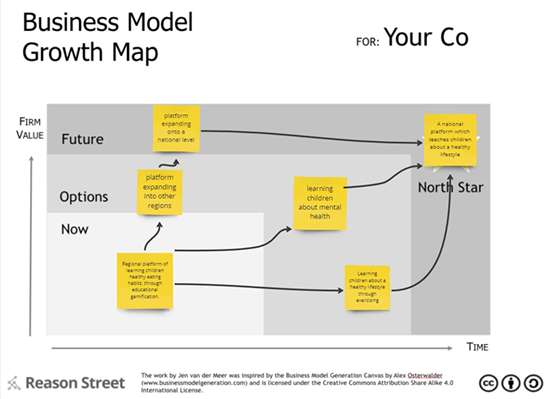
Business considerations were not treated as an add-on after design, but as an integral part of the process, incorporating value propositions, business perspective models, stakeholder mapping, and business shift examples. By distinguishing the municipality as the customer and children as the users, I gained a deeper understanding of how design value is defined and negotiated across different stakeholders.
Within the context of children’s nutrition education and health behavior, the project required careful decision-making around incentive mechanisms, gamification, and ethical risks such as competitive pressure. This strengthened my ability to consider the consequences of design from a broader societal perspective.